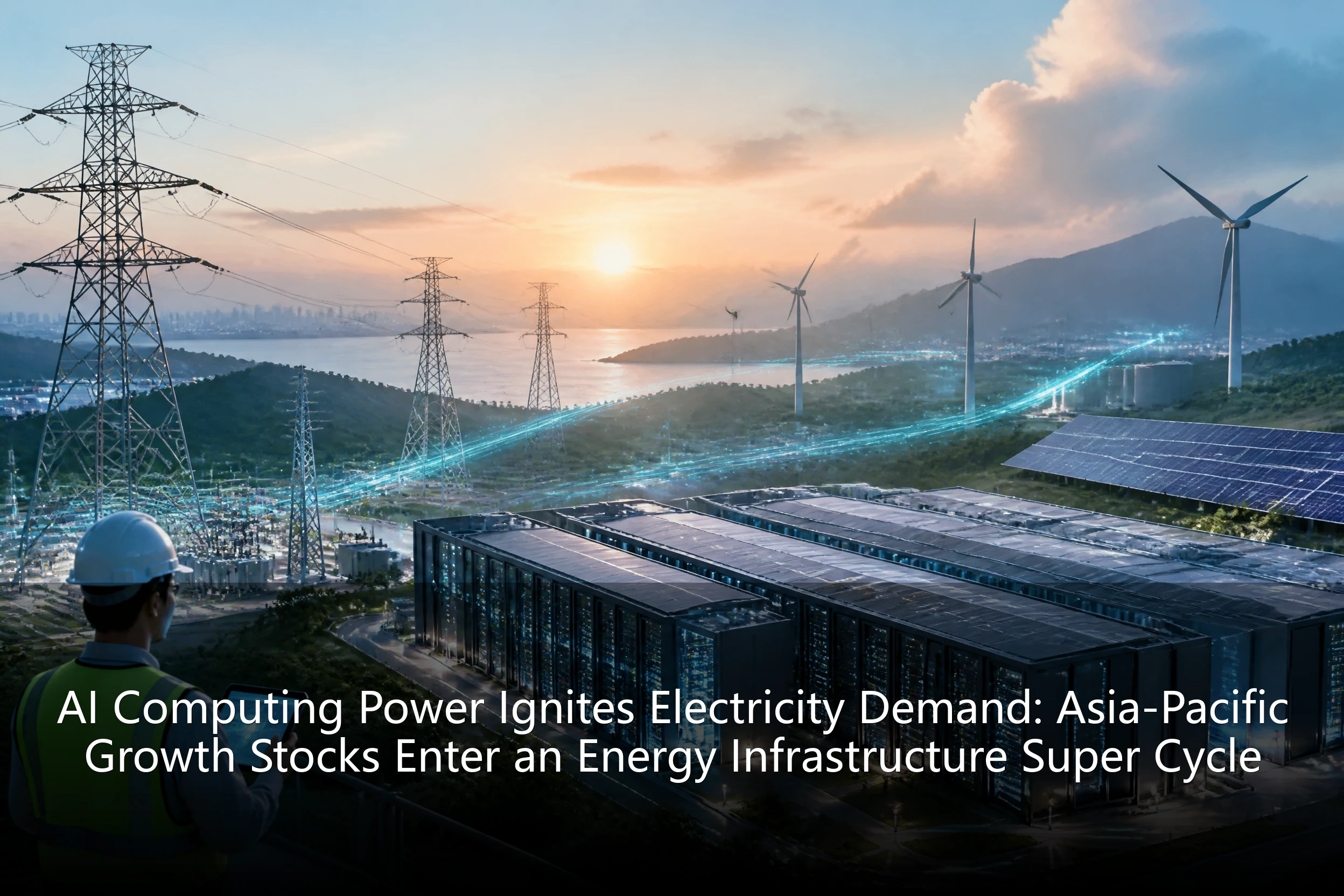
Entering the third quarter of 2026, the core theme of global capital markets is shifting from mere "AI algorithms and chips" to the "physical bottlenecks of computing infrastructure." The most prominent bottleneck is not wafer fabrication capacity, but the power supply supporting massive data center operations. In the Asia-Pacific region, particularly the data center clusters in Singapore and Johor, Malaysia, unprecedented electricity demand pressure is mounting. This structural shift answers the question of "why invest in energy now" for investors and has spawned a new super cycle of energy infrastructure investment in the Asia-Pacific growth stock market.
The "Power Anxiety" Behind AI Computing: Structural Explosion on the Demand Side
In recent years, the proliferation of generative AI has caused data center power consumption to grow exponentially. According to industry research estimates, a standard large-scale AI data center can consume hundreds of megawatts (MW), equivalent to the total electricity usage of a medium-sized city. In the Asia-Pacific, Singapore, as a global data hub, maintains high growth through its Green Data Centre Roadmap despite land and resource constraints; while Johor, Malaysia, just across the causeway, has absorbed significant overflow computing demand and is rapidly emerging as a new Asia-Pacific data center hub.
This wave of computing power directly raises the baseline of regional energy demand. Traditionally, Asia-Pacific power planning relied on stable growth forecasts for industrial and residential use, but now, the "baseload" nature of data center power consumption has broken the supply-demand balance of the past decade. This transforms energy supply-demand analysis from a mere interplay of inventory and weather into a function of tech industry expansion. Therefore, from the demand side, the growth logic of the energy industry has been fundamentally reshaped.
Supply-Side Bottlenecks and Energy Transition Pains: Why Invest in Energy Now?
Facing surging electricity demand, Asia-Pacific nations face a dual challenge on the supply side. On one hand, traditional fossil fuel investments have suffered from prolonged capital expenditure shortfalls due to the global ESG (Environmental, Social, and Governance) wave, limiting peak-shaving capacity. On the other hand, while green energy (such as solar and wind) is growing rapidly, its intermittent nature struggles to independently meet the stringent 24/7 uninterrupted power supply requirements of data centers.
Against this backdrop, the strategic value of investing in the energy industry is highlighted. Singapore and Malaysia are accelerating multiple energy infrastructure projects, including cross-border grid interconnections, liquefied natural gas (LNG) power generation expansion, and green hydrogen pilots. This means natural gas power producers capable of providing stable baseload power, and infrastructure companies involved in new energy storage and grid upgrades, will see a period of highly certain revenue growth. For investors, allocating to energy stocks is no longer a simple cyclical bet but a long-term value investment in building technological infrastructure.
Three Investment Layout Directions: Focusing on Asia-Pacific Energy Growth Stocks
Combining current industry trends and market dynamics, we believe the following three directions deserve focused attention under the "why invest in energy" category:
- Natural Gas Power Generation and LNG Industry Chain: As the optimal bridge for transitioning from fossil fuels to new energy, natural gas's strategic position in the Asia-Pacific has been unprecedentedly elevated. Asia-Pacific utility companies with natural gas import and power generation assets are seeing their earnings forecasts continuously revised upwards alongside rising electricity market prices.
- Power Market Reform and Trading Targets: With the accelerated liberalization of Singapore's electricity market and the launch of futures contracts, power price volatility brings arbitrage and growth opportunities for relevant traders and grid operators. Energy enterprises with pricing power and cross-regional power dispatch capabilities will stand out amid market fluctuations.
- Green Energy and Energy Storage Infrastructure: To meet data center ESG requirements, long-term Power Purchase Agreements (PPAs) for renewable energy like solar and wind continue to hit record highs. Simultaneously, supporting energy storage system construction has become a rigid demand, and growth stocks in the related industry chain possess high explosive potential.
Conclusion: Energy Investment Enters a New "Computing-Driven" Era
In summary, the energy market in 2026 is no longer a traditional sector solely dictated by geopolitics or seasonal weather. The explosion of AI computing demand has injected strong, structurally visible growth momentum into the energy industry. For investors focused on Singapore and Asia-Pacific growth stocks, deeply understanding this historic shift in the energy supply-demand landscape and proactively positioning in high-quality energy stocks benefiting from power shortages and the energy transition will be key to generating excess returns in the coming years. Amid high tech stock valuations, the energy infrastructure sector, with its stable cash flow and certain growth logic, is becoming the most cost-effective investment haven in Asia-Pacific capital markets.